Yes, bird food expires, and it can become genuinely unsafe for birds well before any printed date on the bag. Whether you're dealing with a seed mix left open in the garage, a suet cake that's been sitting out through a warm spell, or a bag of mealworms you forgot about, the short answer is: don't just trust the label. Trust your senses and the storage conditions it's been through.
Does Bird Food Expire? How to Tell If It’s Safe

Maya Henderson
22 Mar 2026
What 'expiration' actually means for bird food
Date labels on bird food packaging can be genuinely confusing because they don't all mean the same thing. 'Best by' and 'sell by' dates are quality markers, not safety cutoffs. They're the manufacturer's estimate of peak freshness, not a hard line after which the food becomes dangerous. 'Use by' is different and stricter because it's tied to safety and nutrient adequacy up to that specific date. After that date, the manufacturer is no longer standing behind the product's quality or safety.
For bird food specifically, this distinction matters a lot. A bag of sunflower hearts with a 'best by' date three months ago might be totally fine if it was stored cool and dry and sealed. That same bag left open in a humid shed through summer? It could be rancid, moldy, or pest-contaminated regardless of the date on the label. The expiration date is a starting point, not the whole picture.
The practical rule: use the printed date as a reference, but always check the food itself. Natural seed, fat, and protein products can spoil faster than the label suggests if storage conditions were poor, or last longer if storage was ideal.
Why bird food goes bad: the four main culprits
Moisture
Moisture is the fastest route to spoiled bird food. Even a small amount of humidity penetrating a bag or container creates the perfect conditions for mold and bacterial growth. Seed stored in a garage, shed, or basement during damp seasons is especially vulnerable. Tray feeders without covers let rain directly wet your seed, and that wet seed can begin growing mold within 24 to 48 hours in warm weather.
Mold
Mold is one of the most common and serious spoilage problems in bird food. It grows readily on damp seed, and some molds produce mycotoxins that are harmful to birds. Moldy bird seed is a real health hazard, not just an aesthetic problem. If you spot visible mold or a musty smell, the food needs to go.
Oxidation and rancidity
High-fat foods like suet, sunflower hearts, peanuts, and nyjer seed are prone to going rancid through oxidation. Sunflower seeds are particularly high in oil, and prolonged storage causes those oils to break down into compounds that smell and taste unpleasant and may be harmful to birds. Suet is especially vulnerable in warm weather. Cornell's Project FeederWatch specifically warns that suet not specially processed for warm temperatures can go rancid quickly in hot conditions. Virginia DWR echoes this, advising against putting out plain suet in warm weather at all because it can melt, spoil, and even stick to birds' feathers.
Pests and insects
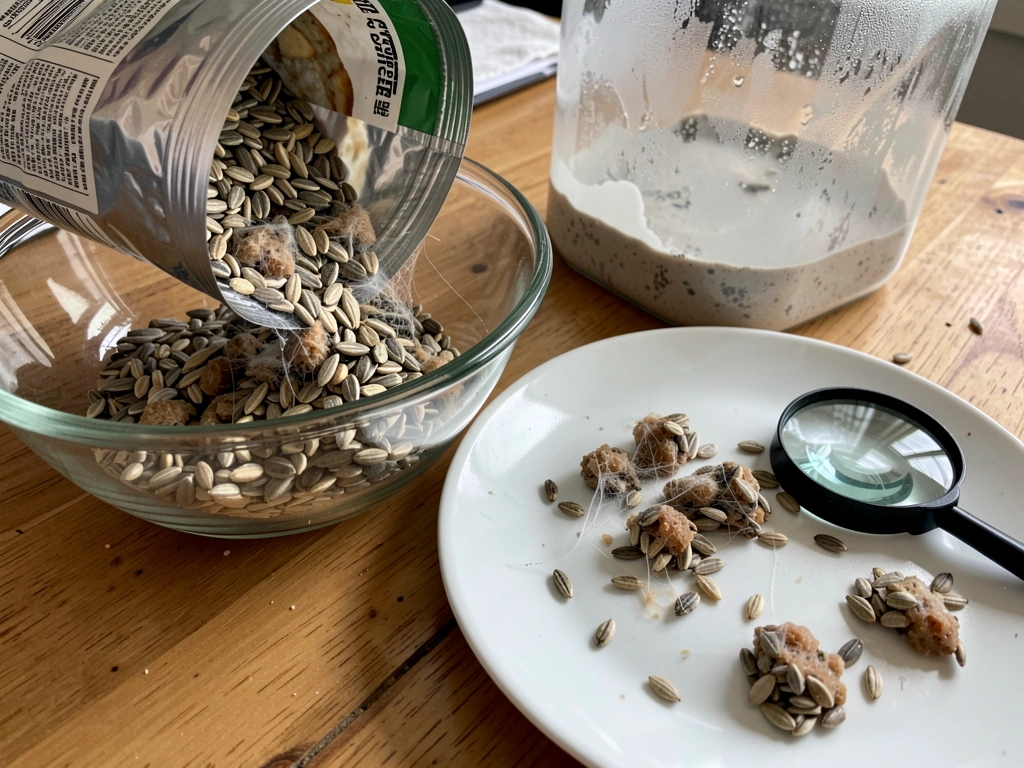
Moths, weevils, mice, and rats are drawn to stored bird food. Once insects get into a bag of seed, they lay eggs, and larvae burrow through the seed leaving waste and webbing behind. Rodents contaminate food with droppings and urine. Any of these signs mean the food is unsafe to use, full stop.
How to tell if your bird food has gone bad
Different types of bird food spoil in different ways. Here's what to look for by food type.
| Food Type | Signs of Spoilage | Common Cause |
|---|---|---|
| Seed mixes / sunflower hearts | Musty or sour smell, clumping, visible mold, webbing, insect larvae | Moisture, pests, oxidation |
| Peanuts / nut mixes | Rancid or bitter smell, shriveled or discolored nuts, oily residue | Oxidation, moisture, mold |
| Suet cakes / fat balls | Strong rancid smell, greasy or melted texture, discoloration, soft consistency | Heat, oxidation, moisture |
| Nyjer (thistle) seed | Clumping, musty smell, seed won't flow freely through feeder ports | Moisture, oxidation |
| Dried mealworms | Musty smell, discoloration, soft or hollow feel, pest activity | Moisture, age, pests |
| Fruit (fresh/dried) | Mold, fermented smell, sliminess, discoloration | Moisture, heat, age |
With any food type, rancidity has a distinctive smell: sharp, bitter, or crayon-like. Mold smells musty or damp-earthy. If you're not sure whether what you're smelling is normal or off, trust your gut. Fresh seed smells clean and slightly nutty. Fresh suet smells fatty but neutral. Anything that makes you wrinkle your nose is a warning sign.
Quick at-home checklist: how to inspect your bird food right now
Run through this before filling your feeder, especially if the food has been stored for a while or stored in less-than-ideal conditions.
- Check the date label first. If there's a 'Use By' date and it's passed, treat the food with extra scrutiny. 'Best By' dates that have passed don't automatically mean discard, but flag the bag for a closer look.
- Look at the container or bag. Is it sealed? Any signs of moisture, dark spots, or residue on the outside? Rodent chew marks? Insect activity around the seams or closure?
- Open it and look inside. Pour a small amount into a clean bowl or onto a white plate. Look for clumping, webbing, larvae, mold spots, discoloration, or any seed that looks shriveled, dark, or unusual.
- Smell it. Bring it close and take a slow breath. Fresh seed smells clean and slightly nutty. Fresh suet smells like fat but nothing sharp. A musty, sour, rancid, or ammonia-like smell means spoilage.
- Feel it. Seed should be dry and flow freely. Suet should be firm in cool conditions. Anything that feels damp, clumped, sticky, or unusually soft is a red flag.
- Consider where and how it was stored. Was it in a sealed container in a cool, dry place? Or open in a humid garage through summer? Storage conditions matter more than the printed date.
Keep it or toss it? How to make the call
When in doubt, throw it out. That's the honest rule. Bird food is cheap compared to the risk of making birds sick or attracting a disease outbreak at your feeder. That said, here's how to think through the common scenarios you might be facing today.
| Scenario | What to do |
|---|---|
| Opened bag stored cool and dry, sealed between uses, no smell or visible issues, within or near best-by date | Safe to use. Inspect each time you fill the feeder. |
| Opened bag left in a humid garage through summer | Inspect carefully. If any clumping, musty smell, or discoloration, discard. Don't risk it. |
| Bag left open (unsealed) for several weeks | Check for pests and mold. If seed pours freely and smells clean, use quickly. If anything looks or smells off, discard. |
| Suet left out in warm weather (above 70°F / 21°C) | Smell it. If rancid or soft, discard. Switch to no-melt suet or hold off until temperatures drop. |
| Mealworms stored past use-by date | Check texture and smell. If musty, discolored, or hollow, discard. Fresh dried mealworms feel firm and smell neutral. |
| Seed with visible webbing or insect larvae | Discard all of it. Do not attempt to pick through. Clean the storage container before using it again. |
| Seed with visible mold, even a small patch | Discard the entire batch. Mold spreads invisibly through the rest of the seed. |
| Recently bought seed stored poorly (e.g., wet bag, left in car) | Inspect closely. If moisture got in, check for clumping and mold. When unsure after poor storage, discard and start fresh. |
For partially used containers, always use a dry scoop and never pour old seed back into a new bag. Mixing old with new introduces any spoilage from the old batch into the fresh supply. Store opened bags in a sealed airtight container instead, and use older seed first before opening the next bag.
What to do right after you find bad feed
Finding spoiled food in your feeder or storage bin means you need to act on a few things at once. Don't just swap in fresh seed. Here's the right sequence.
- Discard the spoiled food. Seal it in a bag before putting it in the trash to avoid attracting pests. Don't compost moldy seed.
- Empty the feeder completely. Remove all remaining food, including any caked or compacted seed at the bottom.
- Clean the feeder before refilling. The feeder itself can harbor mold, bacteria, and spoilage residue that will contaminate your fresh seed immediately. Use a solution of one part bleach to nine parts water (a 1:9 ratio), scrub all surfaces, then rinse thoroughly. South Carolina DNR recommends rinsing all parts for at least 10 seconds to remove chemical residue. Let the feeder dry completely before adding fresh food.
- Clean the area around the feeder. Sweep up or rake away any fallen seed on the ground, which can harbor mold and attract pests.
- Clean your storage container. If the storage bin or bag itself had spoiled food in it, wash it with the same bleach solution, rinse well, and let it dry before putting fresh seed in.
- Refill with fresh, inspected food. Now you're starting clean.
Cornell's CWHL recommends cleaning feeders at least once or twice a month as a baseline using a 1:9 bleach-to-water mix. Project FeederWatch, as cited by Audubon, suggests cleaning seed feeders approximately every two weeks, and more frequently during hot or humid weather. If you found spoiled feed, treat this as a reset and get yourself on a regular cleaning schedule going forward.
How to store bird food so it doesn't go bad
Good storage is the single biggest factor in how long your bird food stays usable. Here's what actually works.
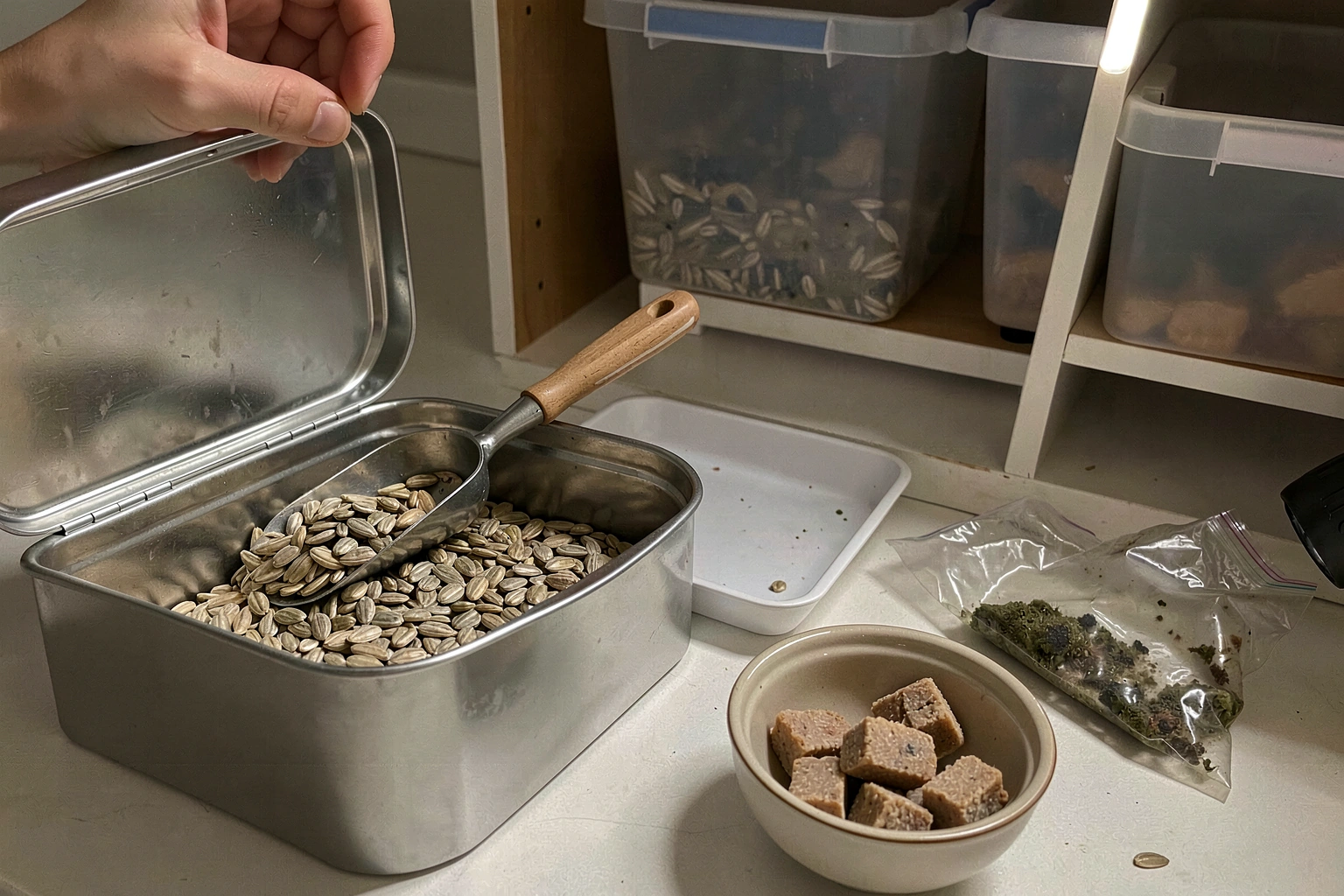
- Use airtight, rigid containers. Metal bins with tight-fitting lids are ideal because they're pest-proof and don't absorb moisture. Heavy-duty plastic containers with locking lids work well too. Avoid flimsy bags or open buckets.
- Store in a cool, dry location with stable temperatures. A cool pantry, basement corner, or climate-controlled space is better than a shed or garage that swings between hot and cold. Garden Wildlife Health recommends minimal temperature variation as a key factor in reducing spoilage.
- Keep it off the ground. Elevating storage containers reduces contact with ground moisture and makes it harder for rodents to access.
- Buy in quantities you'll use within 4 to 6 weeks. It's tempting to buy large bags for value, but fresh smaller amounts beat a big stale supply every time.
- Label containers with the purchase or open date. This takes 10 seconds and saves guesswork later.
- Store different food types separately. Suet should be refrigerated or frozen if not used within a week or two in warm weather. Mealworms and specialty foods often have their own storage requirements on the label, so check those.
- Never top up old seed with new. Use what's in the feeder before refilling, and rotate stock in your storage containers the same way.
For suet specifically: if you live somewhere with warm springs and summers, look for no-melt or rendered suet products rated for higher temperatures. Standard suet can turn rancid and soft very quickly above around 70°F (21°C), which is a problem for birds and messy for your feeder. Refrigerating or freezing suet cakes extends their life significantly.
The bottom line is that bird food does expire, and it can become unsafe for the birds you're trying to help. A quick inspection before each fill, proper sealed storage in a cool dry place, and a regular feeder cleaning routine are all it takes to keep your setup safe and your birds healthy. If you should leave food in your bird cage smells off or looks wrong, replace it. Fresh food and a clean feeder cost very little compared to the alternative.
FAQ
Does an unopened bag of seed expire the same way as an opened one?
If the food is unopened and has been stored in a cool, dry, sealed container, it is more likely to stay usable past a “best by” date. However, if it’s been opened, stored in a humid area, or exposed to heat, treat the printed date as less reliable and inspect for mold, pest damage, or rancid odor first.
Can I salvage seed that smells “off” by rinsing it or soaking it?
For most bird foods, do not rinse and reuse spoiled seed. Moldy or pest-contaminated material can have invisible contamination, and wetting the seed can worsen mold growth. The safest step is to discard the food and clean the feeder and surrounding area thoroughly before refilling.
What if only part of the bag looks moldy or has insect activity?
If you see mold, musty odor, webbing, tunnels, or insect frass (insect waste), discard the entire contents and do not top off the container. Even if only part looks affected, molds and eggs can be distributed through the mix, so partial removal is not a reliable fix.
How can I tell if I have an insect problem before I see obvious damage?
Yes, pests can be hard to notice early. If you find tiny beetles, webbing, or powdery debris, or if birds start avoiding the feeder, assume the food is compromised even without visible mold. Freeze the remaining food only if it is currently clean and pest-free, otherwise discard it.
Is clumping or powderiness in seed always spoilage?
Powdery material in a seed mix can be a sign of insect waste or deteriorated oils, and it can also be shed hulls or natural flour dust from milling. If the powder comes with a musty smell, bitter taste, or clumping due to moisture, treat it as spoilage and throw it out.
At what point does suet become too risky even if I cannot see spoilage?
Suet is the one type where temperature matters a lot. If it has been at warm outdoor temperatures for a while, even if it still looks intact, it may have turned rancid or melted and refrozen. Use smell and feeder cleanup, and consider no-melt or pre-rendered suet for hot weather.
What should I do if I suspect my feeder food made birds sick?
If birds appear ill (lethargy, ruffled feathers, diarrhea) after eating from a feeder where you later found spoiled food, remove all food immediately, stop using the feeder, and clean perches and trays with fresh cleaning solution. Focus on preventing further exposure while you monitor birds and check local guidance.
Can I keep using “older” food that looks fine, or should I replace everything?
If it was contaminated by moisture, mold, or pests, the safest approach is to discard it and start fresh. For food that is only “old” but still dry and clean, you can keep it, but label it as older stock and use it first, then replace it sooner during humid or hot seasons.
Is it okay to top off a feeder with new seed and mix it with old seed?
Mixing old and new seed is a common mistake. When you open a new bag, use it to refill fully, then track age by using older stock first. If you keep batches separate in airtight containers, you reduce the chance that one bad batch contaminates the rest.
How do I identify rancidity specifically in high-oil foods like sunflower hearts?
Sunflower hearts, peanuts, and similar high-oil foods can go rancid without any visible mold. If you notice a sharp, bitter, or “crayon-like” smell, assume rancidity and discard. For these foods, airtight storage and keeping them away from warm garages reduces the risk significantly.
What’s the correct way to store leftovers from a feeder or container?
Use a dry scoop and keep the scoop and container dry. Never dump wet seed back into storage, and don’t pour leftover wet or damp food from a feeder into a bag or bin. Moisture transfer is one of the fastest ways to trigger mold.
How should I adjust storage if I live in a humid climate?
If you store bird food in a garage or basement, watch for seasonal humidity. Consider moving opened bags into sealed airtight containers, and keep those containers off the floor to reduce damp exposure. In very humid climates, using a smaller container you can finish faster can help.
Next Article
Can Bird Eat Popcorn? Safe Guidelines for Pet Birds
Find out if pet or wild birds can eat popcorn, what ingredients are risky, safe portion rules, and what to do if they at